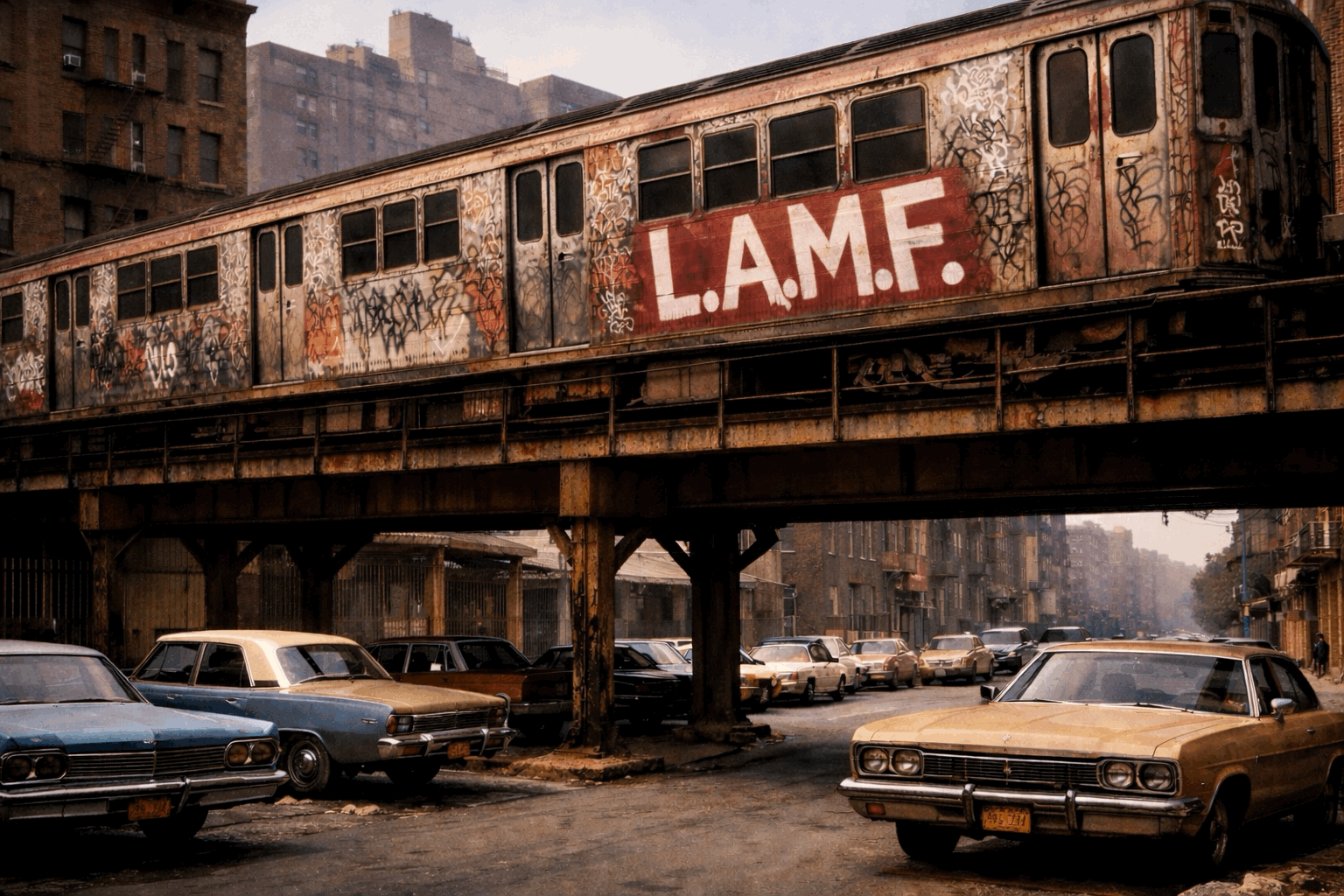
By the time Johnny Thunders put it on a record cover, LAMF had been moving through the Bronx on subway cars for years, carrying stakes that had to be answered for. When punk picked it up, it didn't soften. It amplified.
The phrase hit before it explained itself. That was the point. You saw it sliding into a station on the side of a train already covered with names, scratched windows rattling, steel screaming through curves it was never meant to take. Four letters, fat and urgent, placed where they couldn't be ignored. No glossary. No translation. If you knew, you knew. If you didn't, the doors opened and closed the same.The Trains Spoke FirstIn the early 1970s, the subway system was more than transportation. It was a way to spread your name. What was written in one part of the city traveled to another by morning. Graffiti wasn't decoration. It was broadcast. Tags showed you existed. Throw-ups made you harder to miss. Full pieces claimed space in public. Running through all of it were phrases that made whatever they touched hit harder.Bronx gangs like the Black Spades and Savage Skulls operated in the same graffiti and territorial language ecosystem where phrases like LAMF circulated. Writers didn't use it lightly. It raised the stakes of whatever name sat next to it. It said you were serious. It said you'd back up what you claimed. Language in that world had weight because your reputation traveled with it, and reputation had to be backed up in person.The Bronx in those years ran on systems people enforced themselves. Buildings burned. The city stopped showing up. That left a gap where meaning got worked out face to face. Respect wasn't just talk. It got tested. A phrase sprayed in a yard or stairwell didn't float around disconnected. It lived in the same neighborhood as the person who wrote it. The trains made sure the phrase traveled. A car tagged uptown was downtown by afternoon. The city absorbed what it carried whether anyone planned for it or not.Crossing Scenes Without PermissionNew York in that era mixed people together in ways that feel unlikely now. Economic collapse blurred lines. Musicians, writers, dealers, kids with nothing better to do all rode the same trains. Language crossed neighborhoods the way sound did, through being there and hearing it repeated.Graffiti writers used subway cars and walls. The Heartbreakers used Max's Kansas City, CBGB, and record store flyers on Bleecker Street. Different tools, same city, same need to be seen. By the time Thunders and the band were getting up in those spots, LAMF was already part of New York's vocabulary. In a 1977 interview in the UK monthly magazine ZigZag, he said the phrase came from New York street and gang graffiti. He knew what it meant.That matters. It shows he was paying attention, not just borrowing something cool. It shows the band understood what the word carried before they put it on a record sleeve.The Record as ProofWhen L.A.M.F. arrived in 1977, it didn't sound clean. The mix became famous for being bad. The sessions were messy. The band was falling apart even as they recorded the songs. For some people, that's the problem with the record. For others, it's the reason the record still matters.Thunders played a stripped-down Gibson Les Paul Junior through a cranked Fender Twin—high-output P-90 pickup, tube amp pushed hard. If graffiti writers used fat caps and spray paint, Thunders used that guitar like a spray can that cut through everything. What holds the album together isn't polish. It's how exposed everything sounds. The playing feels pushed, the rough edges are right there. The title isn't dress-up. It sounds like they knew exactly what they were putting on the line.This is where the Bronx graffiti and the punk record line up. A writer spraying those letters onto a train was making a claim in public and accepting that someone might test it. A band pressing the same letters onto vinyl was making a different kind of claim, but the stakes were real either way. Different ground. Same bet.When Language FloatsWhat separates a Bronx stairwell in the early 1970s from a printed shirt now isn't just years. It's that the shirt doesn't know what it's saying. Words move faster and farther now than they used to. They can break away from the situations that gave them meaning. You can wear a phrase without sharing the world that made it necessary.Back then, language stayed close to the body. It moved on trains, through neighborhoods, in scenes where people actually met. It required follow-through. The letters meant something because the people who wrote them could be found. The stakes aren't there anymore. But the words still are.What RemainsMost of the writers who first put LAMF on trains are gone now, painted over or forgotten. The trains look different. The yards are harder to get into. The record is still here. Thunders' Gibson through a cranked Fender Twin hit like a spray can cutting steel—raw, loud, impossible to ignore. Every song still lands hard.Knowing where the phrase came from doesn't make the album smaller. It makes it bigger. The words crossed scenes and lasted because they got tested more than once. They survived contact.Somewhere there might be a photograph of a subway car moving through the Bronx with those four letters on the side, taken before the Heartbreakers existed. The person who wrote them wasn't thinking about being remembered. They were thinking about being seen right then.The doors close. The car moves. The language keeps going.