Organized resistance forced AI companies to acknowledge creative consent. Here’s what’s actually changed.
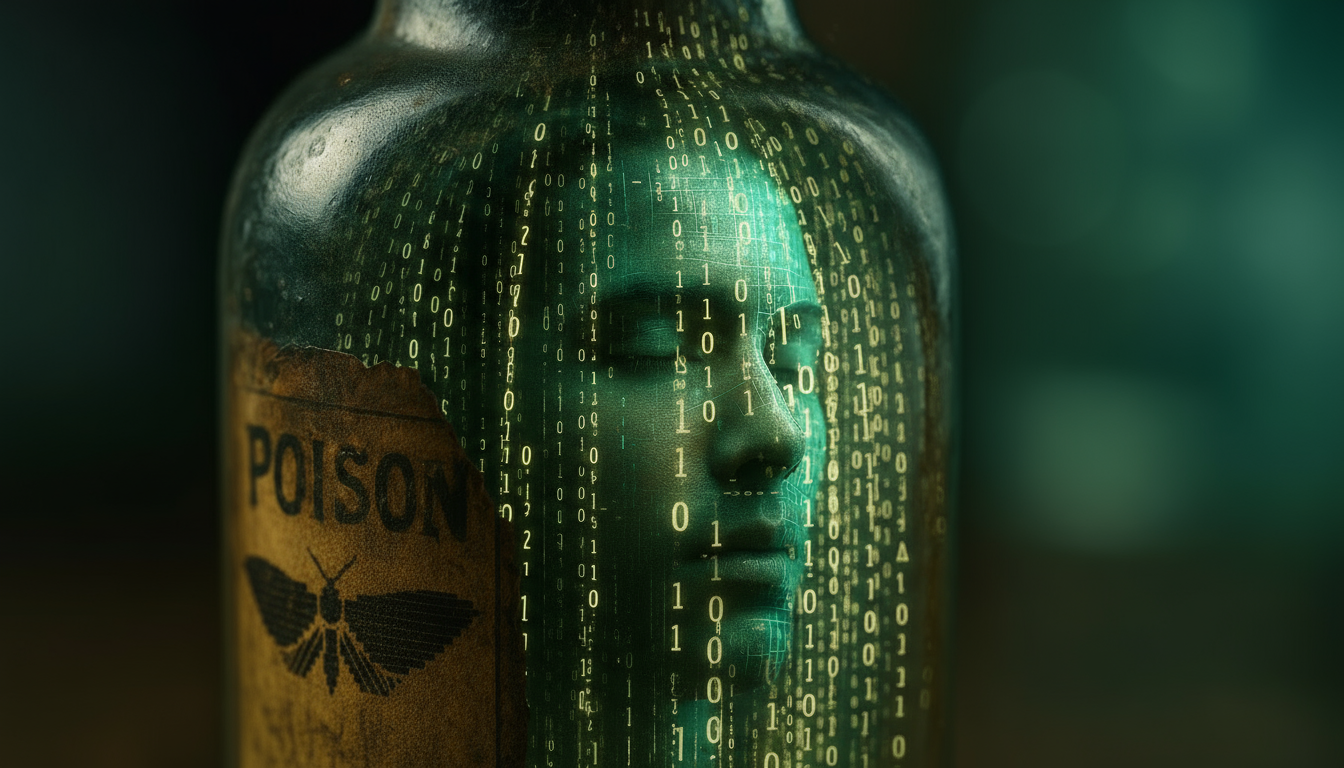
In 2023, a pair of experimental tools called Glaze and Nightshade exploded into the online art world. Developed by University of Chicago researchers Ben Zhao and Shawn Shan, they were designed to protect artists from having their work scraped and mimicked by AI models—a problem that had been eroding trust across creative communities.Glaze and Nightshade offered something radical: digital protection made by and for artists. Glaze cloaked artwork with invisible pixel shifts that confused machine-learning systems. Nightshade went further, “poisoning” AI training data so that models learned distorted versions of what they stole. The tools spread fast across creative circles, shared in Discord channels and indie studios like secret weapons.Back then, it felt like a cultural uprising disguised as software—a way for artists to push back when AI systems were absorbing their work without consent. Two years later, those same tools have become more than defensive code. They sparked a broader movement around creative rights, consent, and the value of human autonomy in an increasingly automated art economy.The Poetry of Digital ResistanceGlaze and Nightshade operate like conceptual art pieces disguised as security software. According to their official documentation, Glaze subtly alters pixels in ways invisible to human eyes but catastrophic to machine-learning systems, essentially cloaking an artwork so that AI models interpret it as another style. Nightshade, described by its developers as a data-poisoning tool that “feeds models corrupted information,” goes further, introducing microscopic distortions that degrade a model’s ability to generate coherent images.Adoption was swift and almost devotional. Tattoo artists in Silver Lake began glazing their flash sheets, while indie-game illustrators processed every sketch before posting. The ritual became part of the creative process itself—a digital warding spell before exposure.But the honeymoon didn’t last long. By 2024, Cambridge University researchers had discovered that simple preprocessing—cropping, resizing, or upscaling—could neutralize much of Glaze’s protection. Later that year, they introduced a testing framework called Light Shed, designed to measure the resilience of tools like Nightshade against evolving AI-training methods. What followed was a high-speed back-and-forth, as artists refined their defenses while models learned to see through them.More troubling was uneven adoption. While digitally savvy artists embraced these tools, older or less technical creators—particularly in the Global South—remained exposed. Protection became another digital divide: the ability to defend one’s work now correlated directly with one’s access to hardware, literacy, and networks.When Individual Solutions Meet Systemic ProblemsThe real revelation came when artists realized that even perfect technical protection couldn’t solve the deeper issue. As Forbes reported, AI companies weren’t just scraping individual artworks—they were vacuuming up entire cultural ecosystems: Instagram posts, album art, concert photos, zine layouts. Everything that makes up the visual DNA of online culture was being converted into training data.By late 2023, artist collectives that had started with Glaze workshops began shifting focus toward labor and consent. The question changed from “How do I protect my art?” to “How do we bargain for the value our culture creates?”It mirrored the music industry’s Napster moment, but this time the stakes weren’t distribution or piracy—they were authorship and identity. Artists weren’t just losing income; they were watching their aesthetic DNA get extracted and recombined without participation in the value created.The fragility of individual technical fixes became a catalyst for organizing. Once artists saw how easily digital protections could be stripped away, they stopped treating this as a technical problem and started recognizing it as a structural one.When the Industry Blinks FirstIn late 2024, Sony AI released something unprecedented: the Fair Human-Centric Image Benchmark (FHIBE), a dataset in which every participant explicitly consented to having their images used for AI training.It might sound procedural, but in context it was revolutionary. For years, AI developers operated on the assumption that “if it’s on the internet, it’s fair game.” FHIBE, detailed in a Nature article, challenged that logic. The dataset included over 10,000 images from nearly 2,000 participants across 81 countries, each granted the right to withdraw consent at any time. When Sony’s team benchmarked existing computer-vision models against this dataset, none passed fairness tests; every one displayed measurable bias.The technical results mattered less than the symbolism. FHIBE marked one of the first times a major corporation publicly aligned with what artist networks and advocacy groups like Spawning had been demanding for years: that consent must be part of how creative data is collected and used.Whether FHIBE marks genuine reform or strategic PR remains to be seen, but its timing matters. It arrived on the heels of years of artist organizing—Glaze users, opt-out registries, and data-ethics petitions that built the moral scaffolding for industry change. It doesn’t fix the system, but it signals that parts of the industry are starting to listen.As one concept artist told me in a Slack thread, “They’re finally admitting consent matters. Question is, will they live it—or just capitalize on it?”Policy Begins to ListenFHIBE isn’t the only sign that creative rights are reshaping the AI landscape.The European Union’s AI Act now requires transparency around training data, and in the U.S., California has passed new laws such as AB 2013 and SB 942 mandating disclosure of AI-training sources and provenance. Even major model developers, under pressure from the opt-out collective Spawning, have begun honoring artist requests to keep their work out of training sets. What started as a few artists fighting to protect their work has begun to bend policy, slowly redrawing the boundaries between creation and control.The Long Game Beyond Technical FixesTwo years after their viral debut, Glaze and Nightshade stand as markers of a creative awakening. They proved that artists wouldn’t passively accept algorithmic appropriation, and they bought time for deeper organizing to take root.Their real victory wasn’t in the code; it was in shifting the conversation. Before these tools, AI development felt inevitable. After them, consent, compensation, and creative autonomy became part of mainstream discourse.We’re now watching a movement that began in Discord servers and small studios mature into something broader: a global negotiation over what ethical creativity looks like in the age of machines. The fight over AI training data isn’t just about ownership—it’s about who gets to define human creativity itself.What began as resistance has become reinvention—a dialogue between human intention and machine interpretation. That’s where innovation and culture are converging now.