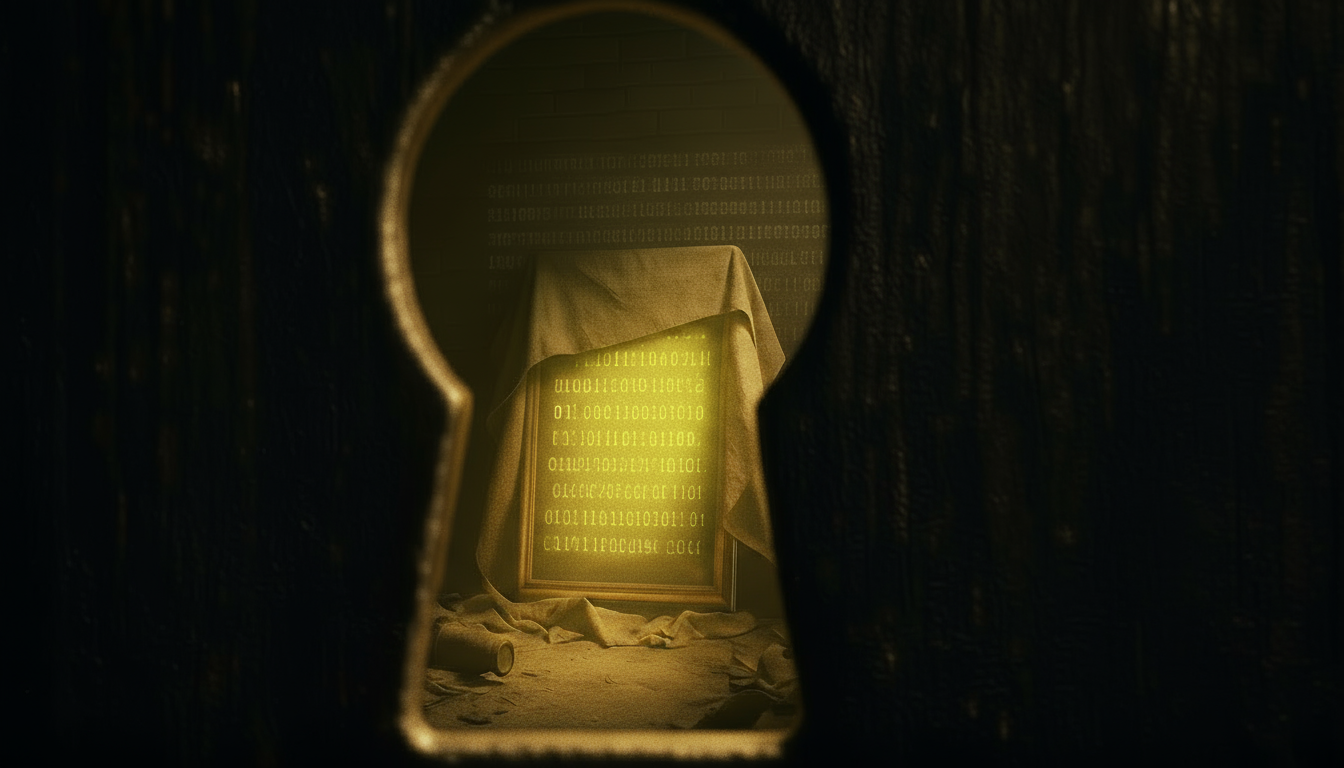
A Picasso hidden for eight decades reminds us that silence has its own power—and sometimes the loudest reveal comes after years in the dark.
Eighty years is a long time to keep a secret. Yet that’s exactly what happened with Picasso’s Bust of a Woman in a Flowery Hat. Painted in 1943, bought in ’44, and then shoved out of sight like glorious contraband, it was passed down in the same French family for generations. Forget museum walls or collectors’ bragging rights—this mystery piece was basically in witness protection. All anyone outside the family ever saw was a grainy black-and-white catalogue shot, a ghost of a painting floating around in books nobody reads (Guardian; Art Newspaper).When it cracked open this month at Paris’s Hôtel Drouot, it wasn’t just another auction stunt. It was the art world equivalent of finding a locked safe in your grandparents’ basement and realizing it still hums with electricity.Shadows in Occupied ParisPicasso wasn’t supposed to thrive in German-occupied France. During that time, modernism was branded “degenerate,” shows were shut down, and the artist himself was under watch (MoMA). So he worked in a shadowy existence where studios turned into bunkers and canvases into quiet acts of defiance. Dora Maar from this period looks softer than his earlier portraits of her—war didn’t kill the intimacy, it sharpened it (Guardian).That intimacy is exactly why hiding the work mattered. In a city where art was seized, flipped, or smuggled through back-channel dealers, just holding onto a canvas was its own underground act. Sometimes resistance looks like spray paint on a wall. Sometimes it’s a masterpiece painting wrapped in cloth and locked away for decades.The Vault KeepersThe family who held onto this piece weren’t traffickers or flashy dealers—they were accidental vault keepers. No resale trail, no shady paperwork, just a long game of silence. Both the Guardian and Artnet reported the painting remained in their possession since 1944, untouched by the churn of the market.That kind of patience has a long, rich history of flexing its own economy. Blue Note Records did it with jazz music, where whole sessions were recorded in the ’50s and ’60s, then stuffed away into vaults only to reemerge as “lost classics.” Wayne Shorter’s Africaine sat untouched for years before anyone bothered to release it (uDiscoverMusic). What was once invisible becomes holy the minute it sees daylight. The same playbook fuels other pop culture phenomena—sneaker drops, NFT mints, even meme coins—where delay and scarcity drive up desire.Tech as the New LocksmithYou don’t just haul an old Picasso out of storage and call it a day. Auction houses and committees run the rituals of catalogue cross-checks, digital scans, and the Comité Picasso stamp of approval. In other discoveries, labs have gone full CSI—X-rays showing hidden faces under Blue Period paintings, infrared peeling back layers to reveal the sketches beneath, and machines stripping the canvas like it’s got secrets in its DNA (Courtauld; Axios).And then there’s the digital layer. Blockchain promises to lock provenance forever, AI scrapes brushstrokes for patterns, and collectors are building entire databases of microscopic surface scans—fingerprinting every painting that matters. What’s locked away isn’t just physical anymore; it’s digital, networked, impossible to torch.The Time Capsule EconomyThe most interesting part? A painting that spent eighty years hidden is now re-emerging in the middle of a modern society overexposed with content and distractions. Millions of images spit out into feeds every second—and yet what cuts through the clutter the hardest is the thing nobody knew existed for the better part of a century.You can find an intriguing parallel in today’s vault culture. In 2021, the decentralized autonomous org PleasrDAOdropped $4 million on Wu-Tang Clan’s Once Upon a Time in Shaolin—a one-copy album pressed to never be released until 2103. It’s a protest piece wrapped as a time bomb. As one buyer told Rolling Stone, it was “the ultimate protest against middlemen and rent seekers.” Their collective ownership and cultural preservation is big vault energy, pure and simple (Wikipedia).The Hit After SilenceSo what’s the lesson? Sometimes the loudest statement is silence. Sometimes the real economy isn’t circulation—it’s hibernation.Picasso’s Dora Maar survived not by being passed around or shown off, but by staying locked up until the world was ready. Jazz tapes, hidden portraits, sealed albums, NFTs: same script, new stage.What’s hidden isn’t always silent. Sometimes it whispers, waits, and lets time do the amplification.