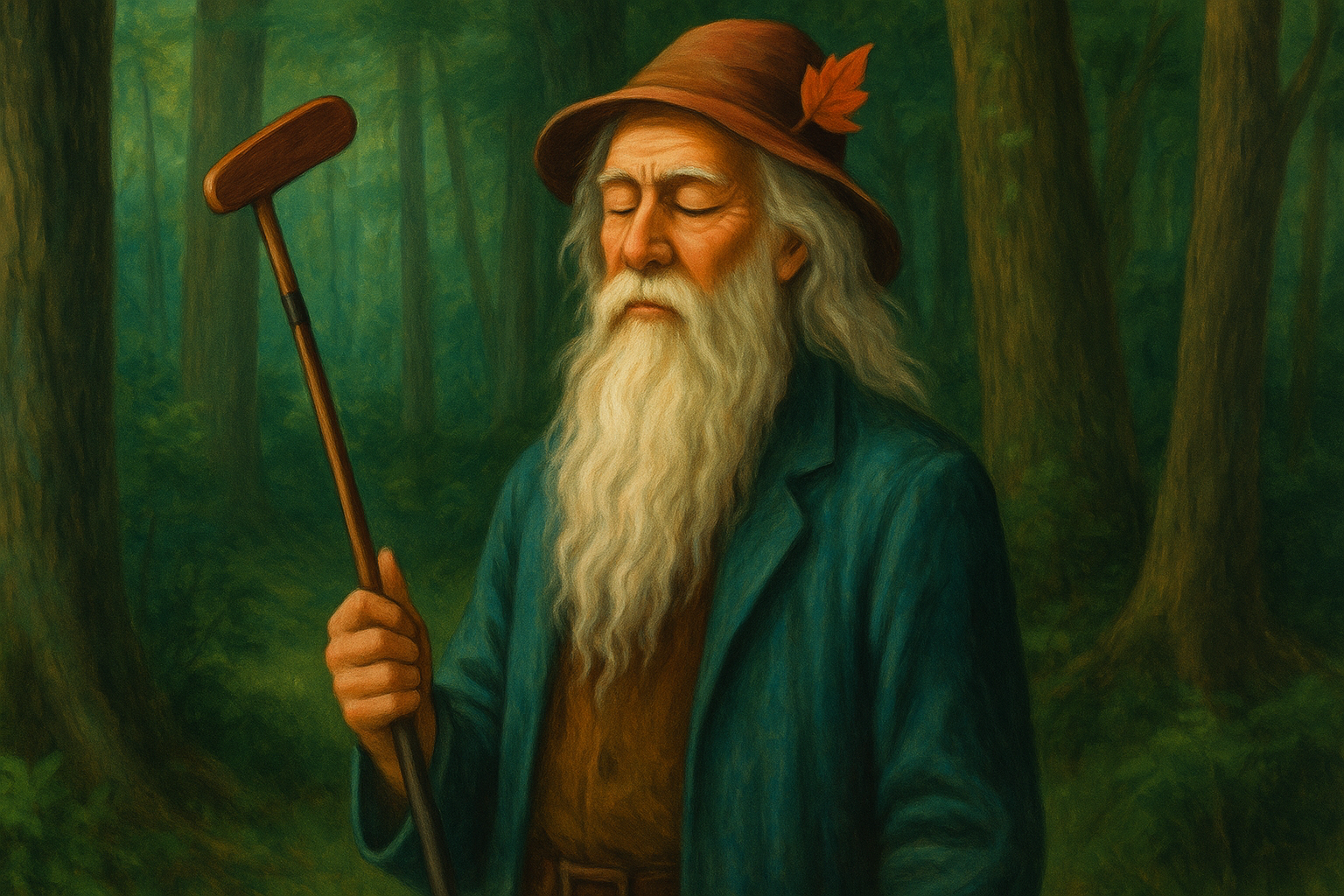
Rip lost twenty years to a nap, but he finally woke up for mini golf. In the Catskills, his legend isn’t just told—it’s playable, one crooked windmill at a time.
The Myth, Rebooted (with a putter)Washington Irving’s Rip Van Winkle is the Catskills’ most famous ghost story dressed as literature. Rip bails on chores, stumbles into the mountains, drinks with mysterious bowlers, then naps through the American Revolution. When he wakes, his beard is long, his wife is gone, and the world has moved on without him.This mini-golf course takes that myth and chops it into nine holes of playable folklore. Out here, thunder rolling off the ridges still feels like pins crashing in the distance. People still joke, “Rip’s bowling again.” But this place doesn’t just tell the story—it lets you putt straight through it.The Nine-Hole FableEach hole isn’t an obstacle—it’s a chapter. You start in the town square, where Rip is adored by kids and dodging his wife’s nagging. A few holes later you’re threading a shot through the windmill that marks his path out of town. On the mountain, little men are bowling thunder into the sky, and Rip can’t resist grabbing a ball and rolling along. Then comes Hole 7: The Sleep. The sign calls it “the 2nd longest hole in America,” twenty years gone in the stroke of a ball. By the time you reach the awakening, his musket is rusted, his dog is gone, and his daughter has to take him in. It’s not just mini golf, it’s folklore blacked out on 17th-century mead and Astroturf.Borscht Belt DNA, Still BuzzingThe Catskills once ran on laughs—vaudeville stages, Borscht Belt hotels packed with families on summer escape, comics sharpening their knives in smoky lounges. That economy collapsed, but the comedic muscle memory never left.This course is a remnant of that spirit: slapstick hazards, visual punchlines, setups and payoffs disguised as sport. It’s backcountry dream theatre in turf form, and you can’t forget the bearded man in a Winkle trucker hat handing you a scorecard like Rip himself woke up and decided to run the joint.The Art History You Didn’t Ask For (But Feel Anyway)Long before jokes, the Catskills were America’s first sublime backdrop—painted by Thomas Cole, Frederic Church, and the Hudson River School as proof the country had grandeur of its own. Mountains and waterfalls framed as spiritual spectacle.This course flips that on its head. Instead of oil paintings of Kaaterskill Falls, you get a windmill obstacle and a bowling-pin mountain. Instead of sublime awe, you get storybook mischief. The impulse is the same: turn the wilderness into a set and let people walk through the story. Here, every putt feels like adding your own brushstroke to the myth.The Scene on a Summer DayThere’s no line, just a steady trickle of players grabbing scorecards before stepping onto the turf. The air smells like cut grass, bug spray, and the stream that runs alongside the course. Kids pound across the little bridge chasing golf balls, while parents lean over the railing to watch the water foam against the rocks.You grab a cold sandwich and a soda—simple fuel that just works out here. Groups move slowly between holes, some with sodas, others with cans of beer sweating in their hands. It’s not rowdy, just relaxed—like the course itself knows half the fun is keeping a buzz while chasing a ball across Astroturf folklore.Under the counter, a phrase drifts into view: Don’t Feed the Bears. It doesn’t feel like a warning so much as a wink from the mountain. Near the shop, another hand-painted phrase—Winkle’s objet magique—casts the souvenirs in a different light, as if every trinket you take home is charged with whatever dream Rip was having.Out here you’re not refreshing feeds anyway—the wilderness eats your cell signal before you even hit the first hole. The only notifications are the splash of the stream and the clink of golf balls against metal cups.Not Irony—MaintenanceIt’s easy to play a place like this for irony. But irony bounces off it. The course doesn’t care about your memes or your hashtags—it’s too old, too weird, too stubborn.What it offers instead is low-stakes joy: cheap, communal, unpolished fun that laughs in the face of curated “experiences” and $18 cocktails. Here, every demographic collides—kids, old-timers, day-trippers, city expats, locals killing time. By the last hole, it doesn’t matter who you came with; you’re part of the same ridiculous ritual.That’s the magic: not nostalgia, not kitsch—maintenance. Keep the signs fresh, patch the turf, let people keep walking through the story. That’s all it takes to keep folklore alive.Field Notes for Future PilgrimsBring cash. Donation-based means the place runs on small economies of care.No bars. The wilderness swallows your signal. Consider it Rip’s kind of dead zone.Look for the signs. Don’t Feed the Bears. Winkle’s objet magique. Half joke, half spell.BYO buzz. Beer in a can goes down easy when you’re lining up a shot on The Sleep.The Catskills have been rebooted a dozen times—resorts, ruins, Airbnbs, ayahuasca. But this little mini-golf course refuses the reset. It’s proof that national treasures don’t need velvet ropes or PR campaigns; they just need turf, sandwiches, beer, and thunder rolling off the mountains.In a world obsessed with upgrades, the most radical move might be to keep the windmill spinning, keep The Sleepimpossible, keep the bridge creaking, and keep the signs muttering their cryptic jokes. Because up here, the ball never really drops—it just waits for you to hit it again.Give them a follow belowIG @puttputtvanwinkle