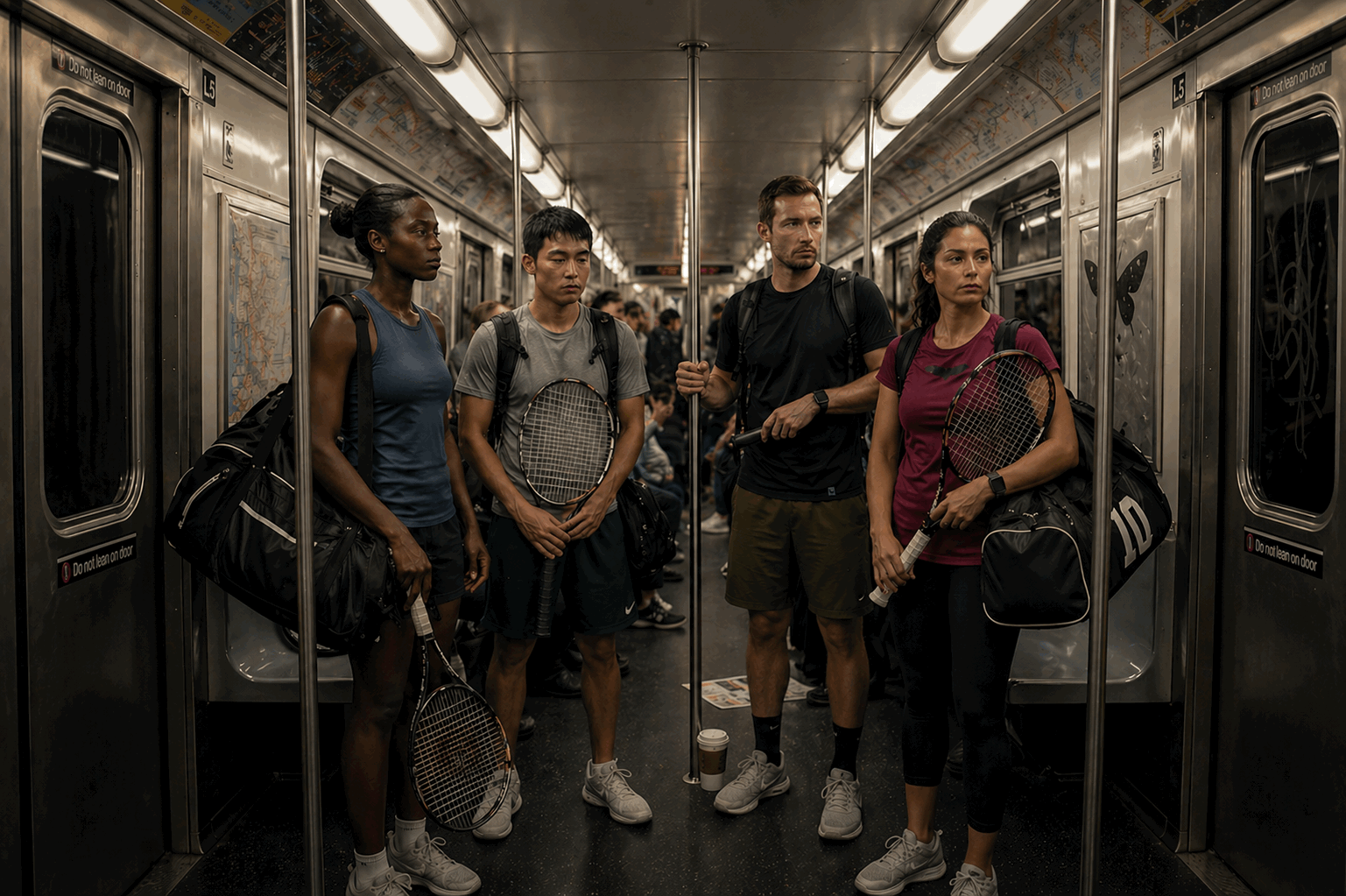
Only in New York does tennis feel like a deli line. Players shuffle in half-awake with racquets instead of bagels, hoping today's special is an open court. With permits, overpriced clubs, and dawn patrols under the BQE, New York tennis isn't just volleys and serves. It's the chaos of even getting on the asphalt.
What was once an exclusive pastime has been reprogrammed for city life. Tennis in New York isn't country clubs and polite claps. It's cracked concrete, chain-link fences, and caffeine-fueled sprints to scribble your name on a signup sheet. The rally is just the reward for surviving everything that comes before it.The Court HustleA city permit costs $100, but that's only the price of admission. The real game is securing a surface. At McCarren Park, you'll find people camped out before dawn, bundled in hoodies with iced coffees balanced on racquet bags, ready to lunge the second the gates creak open. If you're late, good luck. You're watching from the bleachers, not playing.Private clubs dangle the promise of guaranteed court time, but memberships can run to $5,000 a year before initiation fees, and even the more modest options start around $1,000. And even if you can swing it, you're trading pigeons and playground noise for stiff cocktails and silent scoreboards. It doesn't exactly scream fun.That's why public courts are a social equalizer. Everyone lines up together. The wait becomes its own event. You trade tips, argue about sneakers, and quietly size up the strangers you might end up playing against. Scoring a court is part endurance test, part community mixer, all bragging rights.Dressed to DisturbWimbledon's all-white tradition dates to the Victorian era and still reads like a legal document. The tournament specifies that apparel must be white, which "does not include off-white or cream," and allows a single trim of color no wider than one centimeter around the neckline or sleeve cuff. Wimbledon didn't allow women to wear dark undershorts beneath their skirts until 2023. The WTA, back in 2019, explicitly clarified that leggings and compression shorts could be worn without a skirt at all.Then there's the US Open, where in 2024 Naomi Osaka took the court at Louis Armstrong Stadium in a lime green ruffled dress with a white bow on the back and a green visor. Same sport. Different century.On New York courts, the rulebook went out the window decades ago. It's expressive in a way Wimbledon would still call a violation.Brands like Court Date have made the aesthetic explicit. Part apparel brand, part emerging social club, they started as a clothing project and have been quietly building something bigger around it. The merch lifts the visual language of back-page tabloid personals: hotline numbers, bold headline-style copy, the look of a 1990s singles ad reformatted for tennis. A doubles match in Brooklyn can feel like an art opening with serves. The fit is as important as the footwork, and a good outfit earns almost as much respect as a clean serve. Almost.Short Supply, Big EnergyNew York has more than 500 public courts for over 8 million people, which makes every available square of asphalt feel like prime real estate. People treat court time like contraband. You get it when you can, and you guard it. Players don't just celebrate aces. They celebrate securing the slot at all.That scarcity shapes the culture. Matches are faster, line calls are sharper, and people play like their Saturday morning depends on it because in a way, it does. Nobody wants to wait three hours just to be bumped off after one sloppy set. Tempers flare. The vibe runs equal parts friendly competition and street hustle.The shortage has also shaped what gets built around the courts. Court Date isn't the only one moving in that direction. Vicente Munoz runs Pro Shop NYC, a roaming tennis pop-up that started in spring 2025 at Caseta on Hester Street and has since surfaced in SoHo. SportsVerse described it as "something between a library, museum and concept store." Pop-ups stage rare items like John McEnroe's 1985 US Open final shirt alongside Snauwaert rackets, vintage Japanese tennis magazines, and on-site stringing services. Selling product is part of it. The room itself does the rest of the work.Then there's Sets in the City, the monthly tennis party MetroTennis has run at Roosevelt Island Racquet Club since 2012. It's built almost entirely on word of mouth. No press push, no algorithm. Friday evenings, 40-minute play windows, wine and snacks, courts organized by level. People show up to play. It's been growing every year since 2012.The RemixThis isn't tennis the way the rulebook intended. A sport with a tradition of legislating its own dress code now thrives under bridges and beside playgrounds, on courts where nobody is checking your collar. The scarcity that should have killed it made room for something else: brands, pop-ups, and parties doing the social work that clubs used to do. Whatever this is now, it doesn't need a country club. It barely remembers what one was for.In New York, the score almost doesn't matter. What matters is showing up and surviving the line. The waiting is as much the sport as the playing.